Knowing where to start is always a pretty rough one when you have a fear reactive dog, but here are 5 ways that you can, very quickly, see a difference in your reactive dog.
I’ve been a reactive dog parent, Indie (my german shepherd) developed reactivity during his second fear phase, and I trained myself (via the IMDT) to train my dog to get him through that experience.
But you don’t have to do that.
From my experience, these are the 5 easiest ways you can help your reactive dog, and make a difference in your lives together – because I know for a fact just how stressful it is.
Get A Vet Check
So, you know when you’re feeling unwell and your tolerance goes down? And all of a sudden you’re snapping at things and getting grumpy or emotional over things that you wouldn’t normally? Well, I’m actually going through this as I write this, so I can definitely vouch for it.
The same can be said for your dog.
Which is why the first step you need to take with any reactive dog is to get a vet check. Because pain is a huge contributor to being cranky (I’ve been there too! My tolerance goes down significantly when I’m unwell).
This is particularly important if this reactivity has developed suddenly.
Keep Your Distance
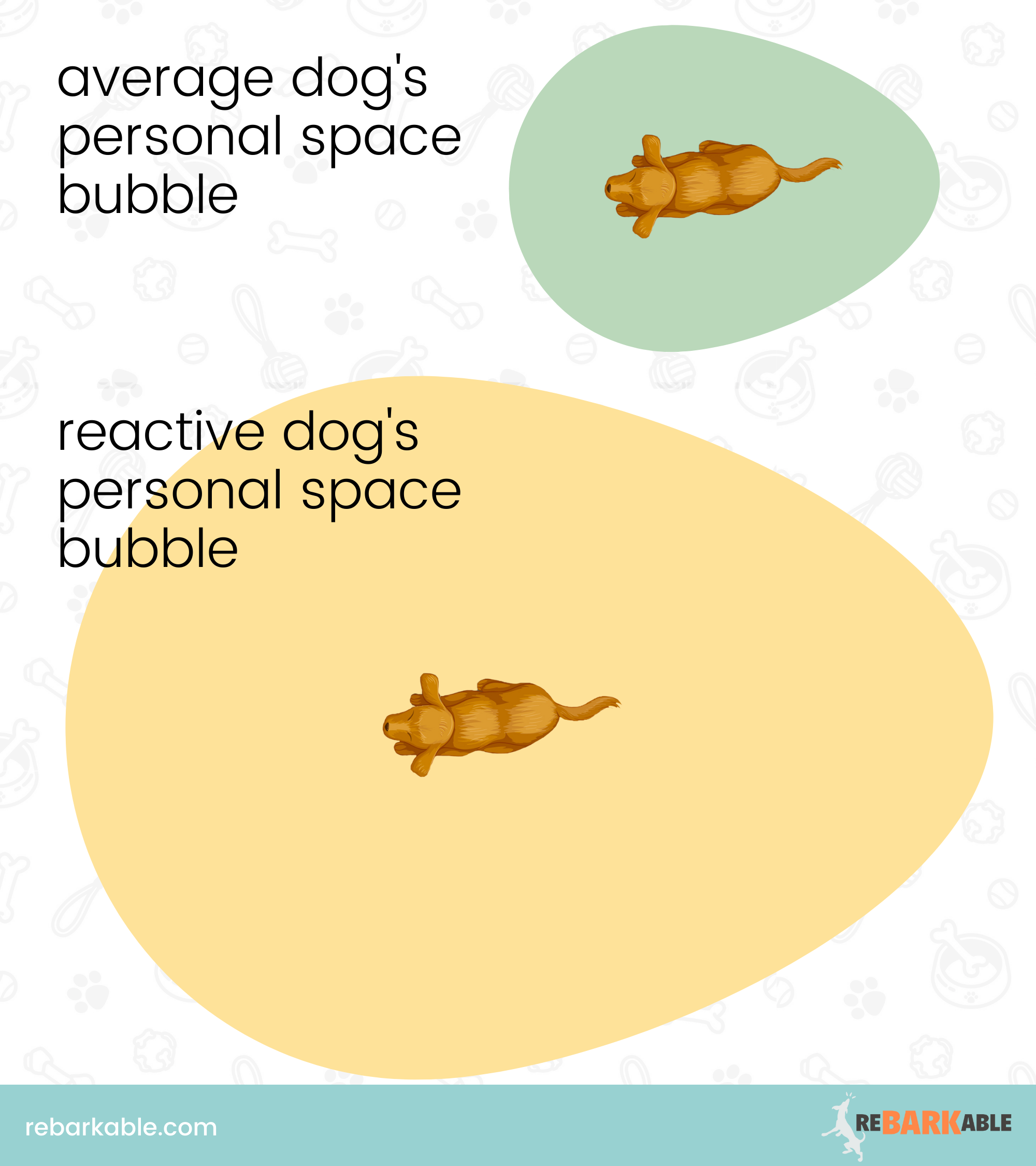
This one is all about personal space. You know when someone gets really close to you and you get uncomfortable?
Dogs have a personal space bubble too. With a reactive dog, the easiest way to explain how they feel and what they see is with this analogy.
Inside this personal space bubble, your dog cannot focus on anything except the trigger. This will be stress inducing – which will increase cortisol and inhibit their ability to improve.
Outside of the bubble is where they can look, maybe be alert but not feel imminent threat and can break focus on the potential problem.
You want to make sure that triggers remain outside of that bubble. This allows your dog to linger in their learning zone too (which is important for the next point!).
Distance is one of the most important parts of working with your reactive dog.
Pair Scary Things With Good Things
This is also called Counter Conditioning & Desensitisation.
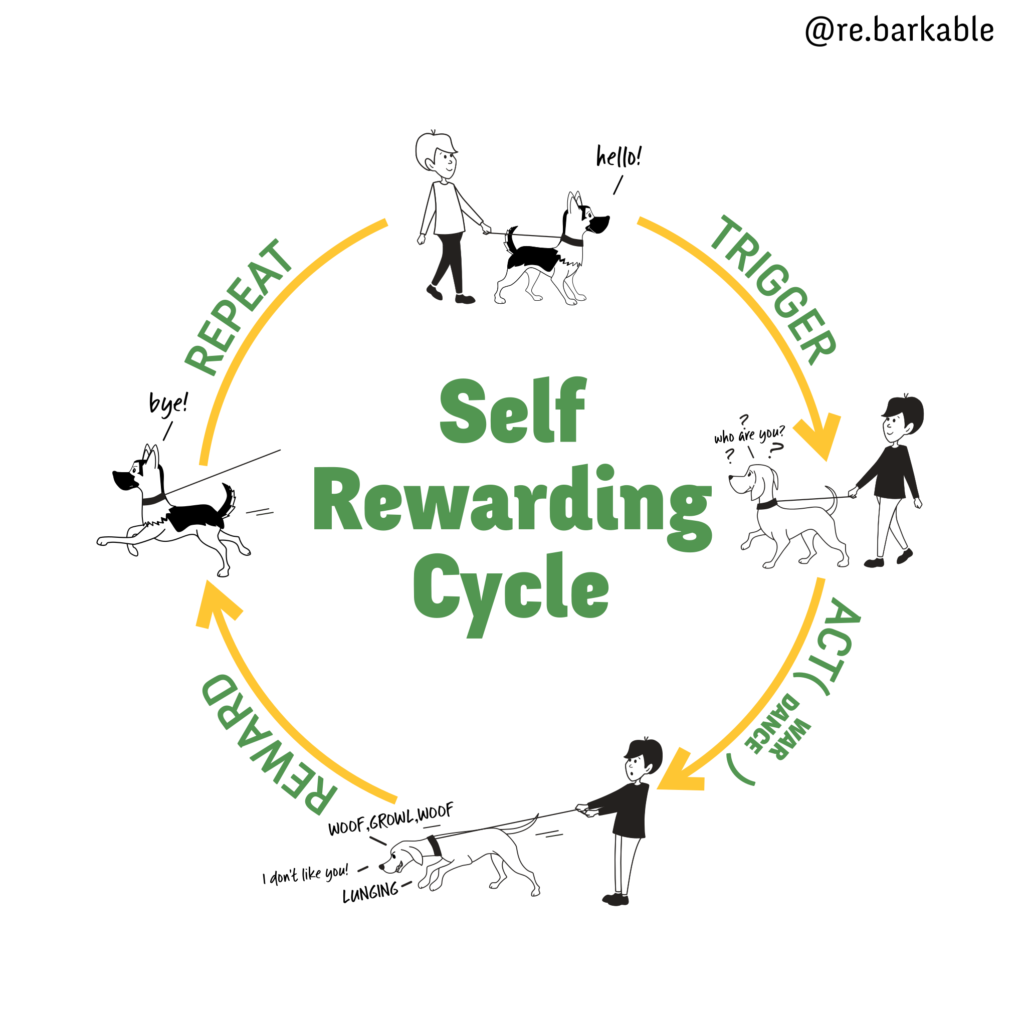
But the essence is that currently? Your dog believes that the trigger makes bad things happen, or are a threat to his or her safety. When they bark and lunge it becomes a self rewarding cycle, such that the scary thing goes away and their safety is restored.
So, to change that? we need to look at changing the appearance of a thing and it being bad. So, if a good thing happens when they see a thing they’ve associated as bad, then we begin counter conditioning.
Desensitisation is the aspect where you start making that bubble smaller. But as the strength of the counter conditioning comes, you can start decreasing the distance between you and the trigger because their bubble is naturally shrinking.
Remember Pavlov’s experiment with the dog & the Bell? you ping the bell and the dog begins drooling? That’s called classical conditioning! Counter conditioning relies on the same principle, but with an added complication that they think the bell means bad things – see? Counter conditioning.
Learn Body Language
Body language and the ladder of aggression are two really important things in terms of reactivity. Because our dogs don’t speak, we have to learn to interpret how they do talk, and how they communicate with one another.
So, getting an insight into that is really useful for you as a discerning dog parent, nervous lick lips, forward posture and various things like this are all warning signs, even down to tail carriage. It’s massively important to read your own dog, and then to be able to read the other dogs in your area.
The more you can fine tune this? The quicker you’ll notice patterns.
For example!
I find a lot of the reactive shepherds I work with have problems with Labradors – why? Well, it’s not a ‘canine racism’ – it’s more the fact that labs tend to be high energy. And with high energy, and rapid movements, and exuberance comes the appearance of threat.
Quickly, it becomes an association that floppy eared golden (black, or brown) dogs of a certain size are labelled “Big Threat!” in the Shepherd’s mental notebook, and they can be harder to overcome as a result.
So, not a form of doggy racism, even though it may seem like it at times.
Add in Fun
Fun is genuinely one of the most underestimated aspects of training any nervous or anxious dog. because happiness measures (fun!) are always fantastic for increasing your dogs overall mood which usually results in stress becoming less of an issue, which can make them more tolerant.
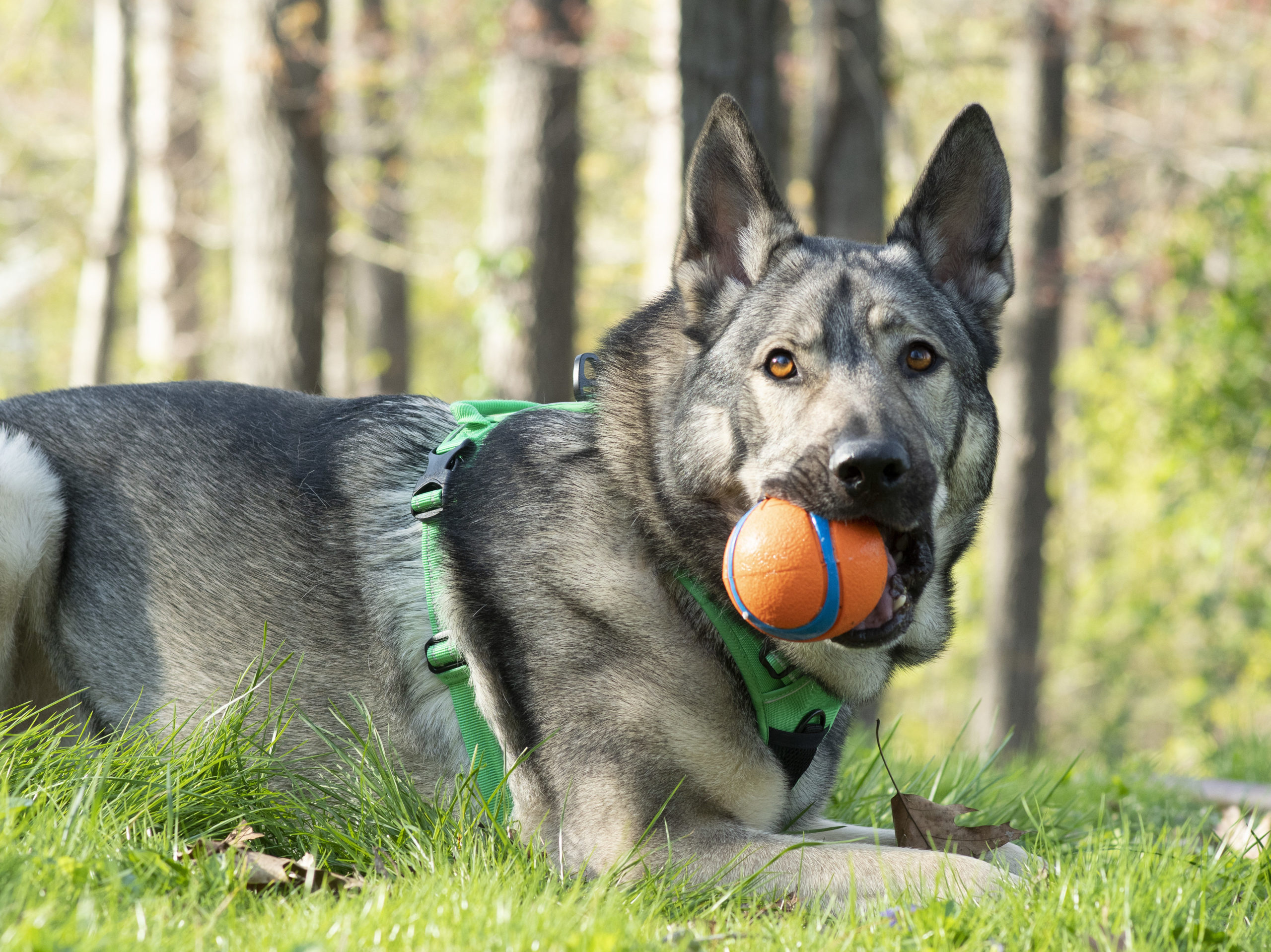
For Indie? This was a ball. We had to be able to play ball – not having that outlet for his energy, and his desire for the bite-kill sequence of the “Predatory motor pattern” (this one’s a complex one!) – meaning he likes to chomp on a ball until it’s dead – but it’s what makes him happy.
For your dog this is going to be pretty unique. It’s going to be down to you to figure that out. You can use some breed tendencies! Like for my coonhounds? Sniffing and howling makes them happy. They thrive on sniffing and howling, the more they do it, the happier they are.
You can also lean on things like:
But even things like swimming, exploring new places*, agility or even parkour! You can look into enrichment too, keeping their brain occupied and stimulated is a really good thing for anxious dogs!
*please note, that typically anxious/fearful dogs like routine? So this is not always a good thing, you really do need to know your dog!
It’s All About The Small Wins
These, in the training world, are kind of the fundamentals of training. For almost any severe behavioural issue we would be looking at these steps. The step next to this is management and equipment. You want to check your gear, things like Harnesses and Muzzles.
Next comes the understanding. Understanding your reactive dog is a process, and fine tuning their response back to a positive one, takes time and practice to achieve the optimum and most reliable result.
If you’re struggling with that? Then you should sign up for updates about the upcoming Rebarkable Reactives course.
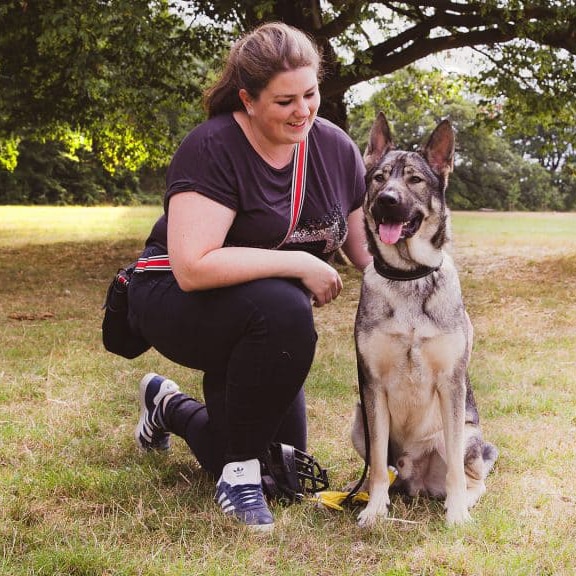
Author, Ali Smith
Ali Smith is a professional, qualified, and multi-award winning trainer is the founder of rebarkable. She has always believed animals deserve kindness and champions force free methods. Believing that dog guardians will all choose the kindest options if proper information is provided, she aims to help all dog guardians who need it and make dog training as accessible as possible
Ali lives win Maryland, US with her husband and her three dogs.
0 Comments