
“Chessies” or Chesapeake Bay Retrievers originate from the Chesapeake Bay area of Maryland. They’re often mistaken for Labradors – but they are a wonderful breed all of their own, made distinct by a different shaped head, more rugged body and a curlier coat.
The Chesapeake Bay Retriever, deeply entrenched in the history of the United States, stands as a testament to resilience, strength, and loyalty. Within this remarkable breed lies a fascinating spectrum of colors that tell the story of its evolution. From the early 1900s, where the Chesapeake Bay Retriever earned recognition for its prowess in cold weather and icy waters, to its current status as a beloved breed, the emphasis on its colors becomes an exploration into the nuances of its coat.

Breed Standard and Evolution
The breed standard, meticulously outlined by the American Kennel Club (AKC), serves as a comprehensive guide, capturing the essence of the Chesapeake Bay Retriever’s distinctive features. Among these features, the coat colors stand out as a defining aspect, creating a visual tapestry that reflects the breed’s identity. As we embark on a journey through the various hues that adorn the Chessie, it becomes clear that the basic colors of dark brown, dead grass, and light brown are not just arbitrary choices but integral components laying the foundation for its captivating coat palette.
The Chesapeake Bay Retriever’s coat colors are a testament to its rich history rooted in the coastal region of Maryland, where the breed emerged as a skilled waterfowl retriever. The waterproof coat, designed to endure the cold waters of the Chesapeake Bay, is a result of generations adapting to the challenging environment. The color of the Chesapeake Bay Retriever’s coat is not only a superficial characteristic; it is a reflection of its connection to the coast, a harmonious blend of functionality and aesthetics. Whether it’s the dark brown resembling the earthy tones of the coast, the dead grass mirroring the natural surroundings, or the light brown capturing the sunlit shores, each hue tells a story of adaptation and purpose.

From the top skull to the back of the feet, every part of the Chesapeake Bay Retriever’s anatomy contributes to its unique appearance. The breed’s coat, ranging from medium length to wavy, and in some cases, showcasing a curly texture, adds another layer of complexity to its visual appeal. This diversity is not confined to aesthetics alone but speaks to the adaptability of the breed as a working dog. Whether a Chesapeake Bay Retriever puppy with its yellow eyes and dull straw color or a seasoned male Chessie displaying darker shadings, the coat colors evolve with the age and experiences of the individual dog, further emphasizing the breed’s dynamic nature.
There are three colors recognised by the AKC and their breed club;
Brown
The brown Chesapeake Bay Retriever ranges from a light to a dark shade. A light brown Chesapeake Bay Retriever exudes the same color as cocoa, while the darker ones shine like a rich piece of bittersweet chocolate.
Sedge
Unique to this breed is the sedge color, quite rare in other breeds. The hue varies hugely in this category, with dogs ranging from a reddish-yellow color to a vibrant, fiery red and even a chestnut shade! It’s a delightful palette of warmth seen on a dog’s coat.
Deadgrass
Deadgrass is another common color in this breed. As the name suggests, this could be any shade from a light, pale tan, faded by the sun and elements, to a dull, rich straw color.
Tan & Ash
Some experts also include tan and ash as separate color categories – though they are notably not in the breed standard, given the variety and depth of these colors in this breed.
The breed standard emphasizes that the coat’s texture and color should repel water and help the dog blend with its surroundings. That’s what led to the beautiful and functional coat the Chesapeake Bay Retriever is known for today!

Markings
The Chesapeake Bay Retriever is famous for its cool, solid color coat – no crazy patterns or anything like that. But that doesn’t mean they’re monotonous! The color can play around a bit, with shades that can go from light to dark, like adding highlights to their coat!
Sometimes you might spot a chessie with a tiny white patch on their chest, like a secret mark! It’s cute, and we usually call it a “breastplate.” It’s hardly noticeable, and shouldn’t take away from their overall solid color look.
You rarely see a Chesapeake Bay Retriever with white markings on the belly or bottom of the legs. Competitions tied up with rules and standards generally aren’t too fond of extensive white markings. The solid-color look is their statement, after all. It’s like these dogs own a set of lovely monochrome outfits!
Chessies also might get a “mask,” where their fur on the face or muzzle could be a bit darker. And the fur on their back or around their sides can have a different shading too – usually going darker. It’s like they’ve been artistically shaded!
The Chesapeake Bay Retriever rocks a mostly single color coat – from light to dark, with slight variations, and maybe some tiny white marks. They’re like the cool minimalists of the dog world!

The Chesapeake Bay Retriever’s Coat Color Evolution
Absolutely! The unique coat colors of the Chesapeake Bay Retriever aren’t just aesthetic choices; they have important historical and functional justifications.
Back in the day, Chesapeake Bay Retrievers were bred to work as water-dogs, retrieving waterfowl for hunters in the icy Chesapeake Bay waters. Their colors – Sedge, Deadgrass, and Brown – mimic the surrounding marshes and landscapes. This camouflage was super useful for a retriever as it enabled them to blend in while working in a hunting scenario.
More than just the blend-in factor, the solid color of their coats was also super practical. Their coats resisted water and kept the dogs warm, even when they had to dash into icy waters repeatedly. Given that their key job was to retrieve in the harsh Chesapeake Bay environment, this trait was invaluable.
Beyond functionality, their color started defining them as a breed. Over time, preferences for strong, solid colors became a part of their breed standards. This helped set the Chesapeake Bay Retrievers apart from other retriever breeds. These unique color patterns were preserved and valued over generations.
Therefore, the self-color pattern – the dog being primarily one color with potentially some lighter or darker shadings of the same color – became most preferred in Chesapeake Bay Retrievers. The breed’s colors are more than just a style; they’re a part of their history, identity, and functionality!

Differentiating a labrador from a Chesapeake Bay Retriever
This is something I hear a lot when chessie’s come up. Telling the difference between a Labrador Retriever and a Chesapeake Bay Retriever can be a bit tricky due to their similar appearances. Here’s a rundown of how to differentiate the two:
- Appearance: Although these breeds may look alike, there are some key distinctions. Labradors usually come in three coat colors: black, yellow, and chocolate, while Chesapeake Bay Retrievers mainly have sedge, deadgrass, or brown coats that help them blend in with their environment. That said, fox red, silver, charcoal and other colour variants are much more common in labradors.
- Size: Labradors tend to stand around 23 to 24 inches tall, whereas Chesapeake Bay Retrievers are often a bit taller, ranging from 21 to 26 inches.
- Personality: Keep in mind that personalities can vary a lot, even within a single breed. Generally, Labradors are known for their friendly nature and are widely chosen as family pets and service dogs. In contrast, Chesapeake Bay Retrievers usually have a more serious demeanor and a strong sense of determination. They can be extremely loyal and protective as well.
- Coat texture: One notable difference between the breeds is their coat texture. Both types of dogs have water-resistant coats, but the coat of a Chesapeake Bay Retriever is slightly oily and wavy, while Labradors have a short, dense coat.
- Eyes: The eyes of these two breeds can often be telling. Labradors usually have friendly-looking, medium-sized brown or hazel eyes. Chesapeake Bay Retrievers, on the other hand, typically have amber or yellowish eyes, which can give them a more intense gaze.
Remember that these are mainly general traits, and individual dogs can exhibit various differences. Spending time with the dogs and watching their behavior can help give you a better understanding of their breed.
First & Foremost; Chessies Are Working Dogs
Chessies can be wonderful dogs, but they are working dogs who were bred for form and function before they were bred for looks. And whilst they are stunning, they are also not quite as family friendly as a labrador might be, so if you’re looking for an alternative to a labrador, you might consider a different breed – but if your heart is set on this water wonder dog? Go for it, make sure you get a great breeder, and enjoy your pup!
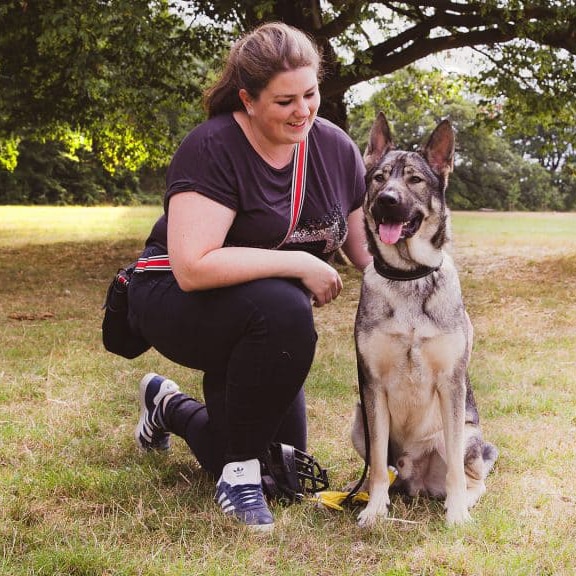
Author, Ali Smith
Ali Smith is a professional, qualified, and multi-award winning trainer is the founder of rebarkable. She has always believed animals deserve kindness and champions force free methods. Believing that dog guardians will all choose the kindest options if proper information is provided, she aims to help all dog guardians who need it and make dog training as accessible as possible
Ali lives win Maryland, US with her husband and her three dogs.




0 Comments