We all love walking our puppy, (most of the time) but understanding how much exercise a puppy actually needs is really important.
I have seen it all.
Honestly. I log into the fi app, and I see that there are 5-month-old puppies racking up a million steps.
I see new puppy parents saying how their little pupper is awesome and had a great 5km run…
And I die a little bit.
Why?
Because I know for a fact that this is often a lot for a fully grown dog, let alone a puppy.
And, because I know that this will not only potentially have repercussions on health, but on wellness, happiness and (most importantly to me) on behaviour.
There’s an old phrase that “A Tired Dog, Is A Good Dog” – well let me tell you, whoever created this phrase over simplified. It takes mind and muscle for a dog to be satiated tired. Just tiring out the muscles? Means you get a dog who often becomes overtired.
And overtired? Sucks.
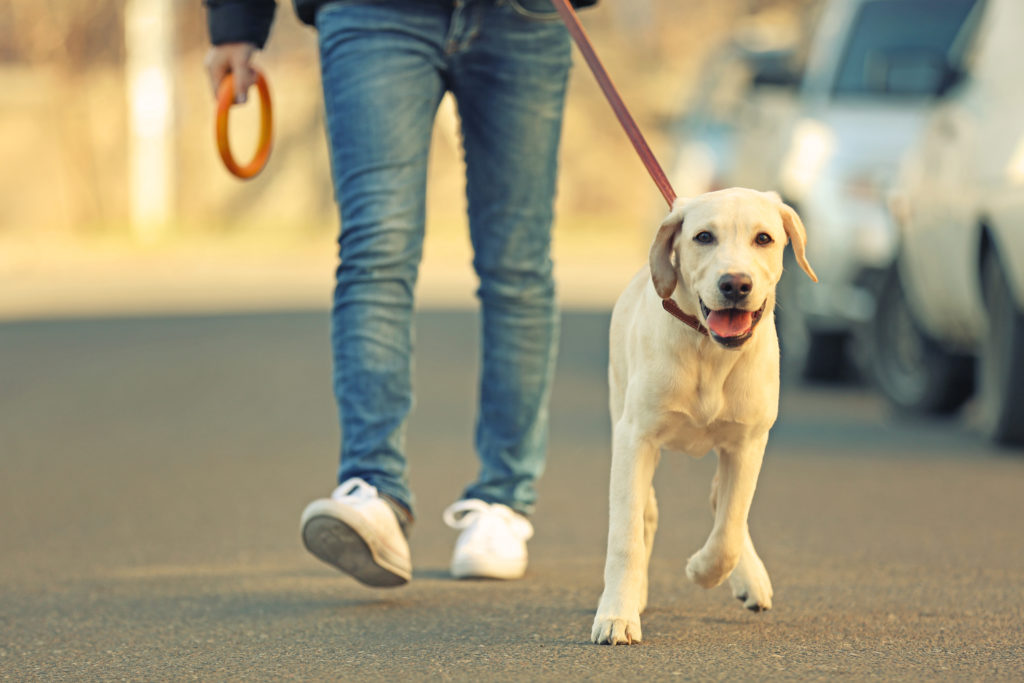
Whilst it can seem like the easier thing to do, to just take them out, wear them out, and let them ‘burn off energy’, it’s often counterproductive.
So, how much exercise does your puppy need?
Recommended Walking For Puppies
The rule of Thumb is 5 mins per month of age, twice a day.
So, a 2 month old puppy (8 weeks) can walk 10 minutes, twice a day.
I do like to say that larger can have a smidge more, and that smaller breeds need an ickle bit less – but generally, the ‘medium’ breed works for all.
 |  |  |  |  |
|
|---|---|---|---|---|---|
| XS | S | M | L | XL | |
| e.g. Chihuahua, Yorkshire terrier, Papillion. | e.g. Miniature Schnauzer, Bichon Frise, Dachshund. | e.g. Springer Spaniel, Bull Terrier, Vizsla | e.g. German Shepherd, American Bulldog, Alaskan Malamute | e.g. Newfoundland, St. Bernard, Irish Wolfhound | |
| Time in minutes per walk, permitted twice a day | Time in minutes per walk, permitted twice a day | Time in minutes per walk, permitted twice a day | Time in minutes per walk, permitted twice a day | Time in minutes per walk, permitted twice a day | |
| 2 months | 7 | 10 | 10 | 15 | 15 |
| 3 months | 12 | 15 | 15 | 20 | 20 |
| 4 months | 16 | 20 | 20 | 25 | 25 |
| 5 months | 20 | 25 | 25 | 30 | 30 |
| 6 months | 25 | 30 | 30 | 35 | 35 |
| 7 months | 30 | 35 | 35 | 40 | 40 |
| 8 months | 35 | 40 | 40 | 45 | 45 |
| 9 months | 40 | 45 | 45 | 50 | 50 |
| 12 months | 60 | 60 | 60 | 60 | 60 |
It’s really good to note, that this shouldn’t be a sharp change, like suddenly going from 10 mins to 30 mins because you’ve just read this. You’d need to step it up gradually and increase your puppy’s ability to walk – and that may apply if you’re decreasing walking time too. Decreasing by a couple of minutes every few days.
But That Really Doesn’t Seem Like A Lot?
Puppies need a lot of monitoring with exercise. Gentle exercise is always advisable; minimise jumping (especially for extra-large breeds and toy/small breeds) a good guideline is 5 mins a day per month, twice a day. So a two month old puppy should get 10 mins twice a day, whereas a 4 month old puppy would be 20 mins twice a day. Exercise can (and should!) share time with training, chewing and socialisation. This will help you make the best of the time your puppy spends awake. Did you know you can also run with your dog, but this should always wait until they’re at least 18 months old.
Can I Over Walk My Puppy?
Yep. And the consequence is often overtiredness, zoomies, extra extra bite-y-ness and a lack of ability to focus. Why not have a read about what makes an overtired pup.
Overtired Puppy? Here’s How To Tell If Your Puppy is Too Tired with 7 Simple Solutions!
When Can I Go Running With My Puppy?
You should wait until growth plates are done closing up and your pup is deemed ‘fully grown’. Of course you can start training way before that. But, generally speaking? I recommend at least 18 months before you start hitting hiking trails and roads with real running in mind. Even then, please make sure to warm up and warm down for your dog too!
When Can I take My Puppy On Proper Walks?
Well, you start getting to around an hour walking twice a day, at a year of age. Though you can still get great walks out of them at younger than this, from about 9 months of age.
Consider A Dog’s Natural Cycle
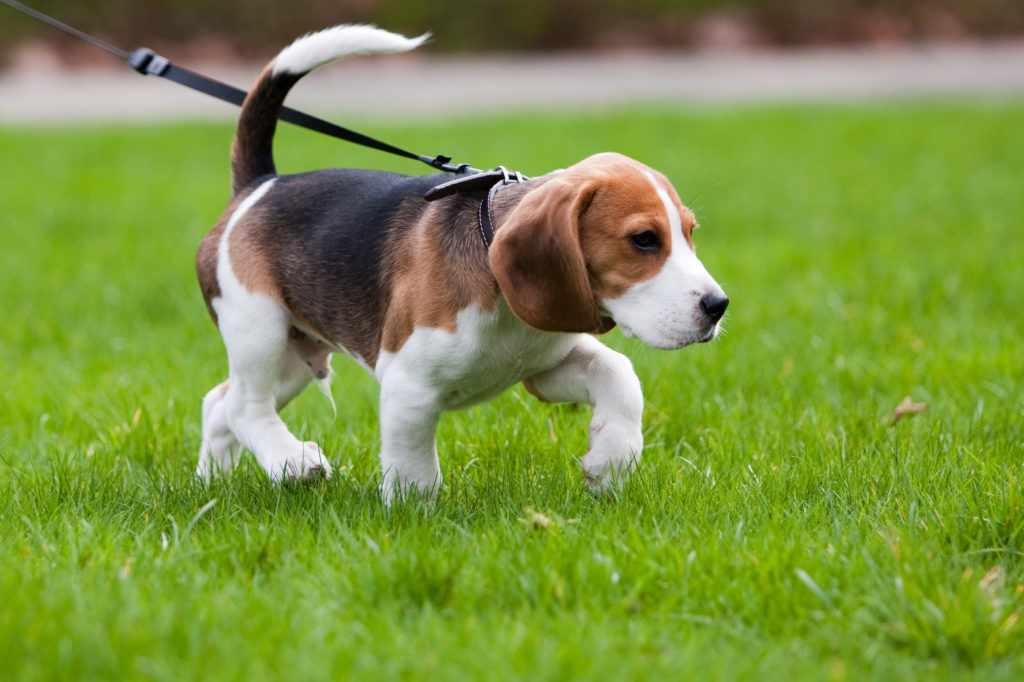
Did you know your puppy’s natural rhythms will become crepuscular? Meaning that they will be naturally more active around dawn, and around dusk!
This works really well if you work, or if you have kids too, because then you can do their walks easily first thing in the morning or last thing at night. For a puppy, getting them into this routine can really help in the long run! It’s also a great way to ensure your pup is emptied out after sleep, and before sleep too!
What About My Puppy’s Breed? Does That Affect How Long My Puppy Can Walk?
Yep! Yes it does. Short legs have to walk further afterall, and it’s also good to look at things like whether you have a bracycephalic breed, such as a pug, boxer or english bulldog. The more ‘flat faced’ the breed, the more difficult breathing tends to be, so it’s good to consider that when you’re walking.
But What About Larger Breeds? Should They Be Walked More?
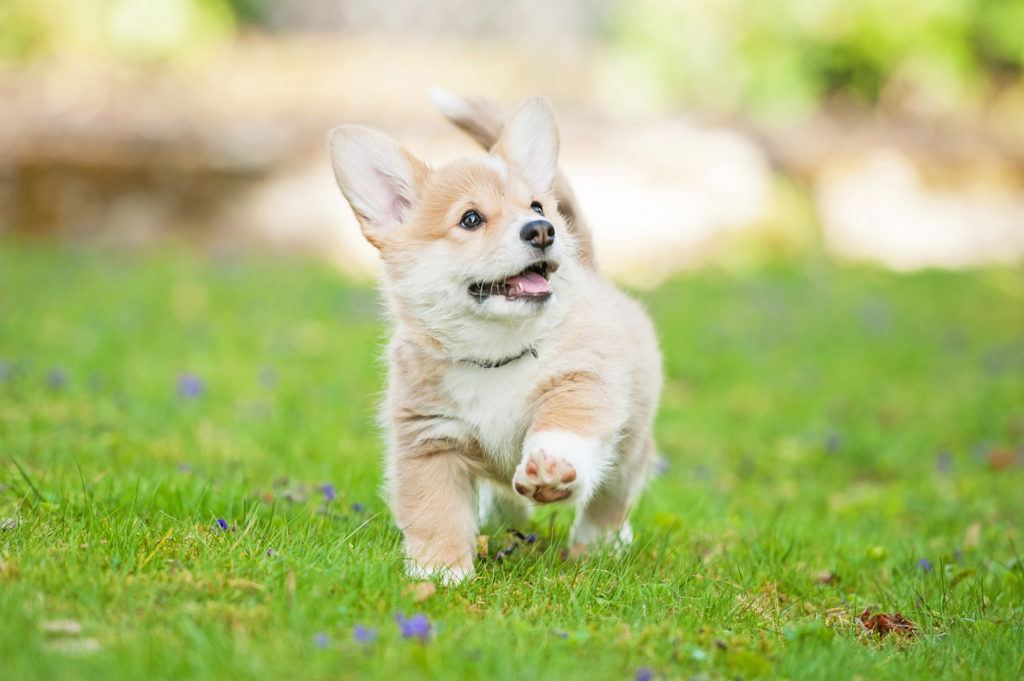
I mean, a little? They can be walked a little longer, but this should be a negligible amount. 5 minutes more, perhaps? But even then I would be careful because larger breeds tend to be more prone to things like hip dysplasia – which over exercise at a young age can impact.
Do I Need To Consider The Weather When Walking My Puppy?
Firstly, remember that extreme heat and cold is relative to breed, and where they’re raised. For example, a husky raised in tropical temperatures might struggle, but not as much as one raised in Alaska. So again, knowing your dog is imperative.
Extreme climates are a tough one generally speaking. Short stretches of severe hot or cold weather can typically be worked around with enrichment, exercising at early hours when it’s cooler, or by giving cooling coats, or conversely, coats when it’s cold.
if they occur for long periods of time (e.g. months) you may wish to invest in a treadmill or find regular access to an indoor area that’s safe and temperature controlled for play and exercise. Swimming could also be a great options for dealing with hot weather. Then there’s also things like flirt poles to use in smaller areas.
Remember! Walks Are Not The Be-All & End-All.
Having days off from walking is equally important. Remember, your dog has to know what off is as well as on.
Being able to not walk, being able to stay home, and you knowing and understanding how to focus their energy into something else, to work their mind instead of their muscles. Afterall, it’s incredibly unlikely that your dog will go their entire life without taking some down time (e.g. post surgery, or after illness) so teaching them how to be calm, and not bounce off the walkks if they don’t get a walk is a requirement of any pet dog.
If you need guidance on helping your puppy be the best they can be, and you want that info weekly, check out our Pupdates!
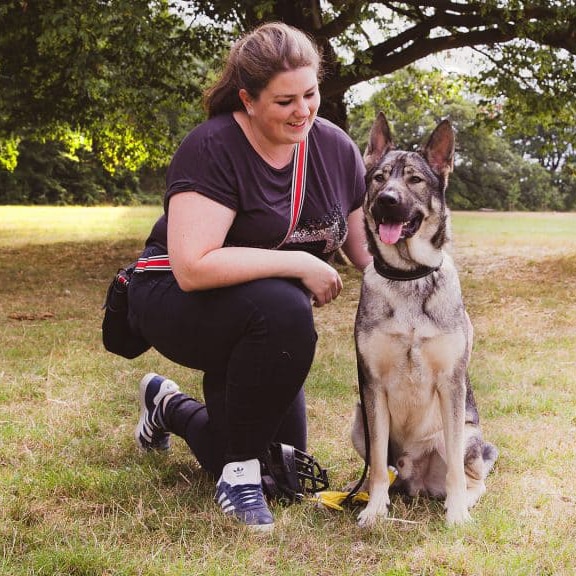
Author, Ali Smith
Ali Smith is a professional, qualified, and multi-award winning trainer is the founder of rebarkable. She has always believed animals deserve kindness and champions force free methods. Believing that dog guardians will all choose the kindest options if proper information is provided, she aims to help all dog guardians who need it and make dog training as accessible as possible
Ali lives win Maryland, US with her husband and her three dogs.


0 Comments