Introducing a reactive dog to another dog is a good reason to lose your confidence.
It can feel impossible. But, as someone who has had a reactive dog and introduced him to many dogs at this stage, it is entirely doable. You just need to remember to set them up for success at every stage of their learning.
Reactive dogs are reactive because they struggle to trust, not because they’re anti-social per se.
First though, let’s answer a big question…
Can My Reactive Dog Be With Other Dogs?
YES.
Most ‘reactive’ dogs who react to other dogs can and will be able to be introduced.
Reactivity tend to stem from a fear or nervousness about the other dog being a potential threat. What we need to do is be aware of our dogs, what their triggers are (you may find this helpful if you’re still trying to figure that out), where their bubble is, and how (consequently) to move them forwards, which is what we’re going to cover in this!
What You Need To Know.
- What dogs are difficult
- Your dog’s bubble
- What treats your dog loves
The more difficult dog is going to be the dog who leads this. It might be a case that this changes throughout the process, so keep it in mind and keep discussing throughout the procedure.
What Tools do You Need?
Starting off with the right stuff is always important. So, if you can start on the right paw you’re definitely going to get further.
Secure Harness
For this one, I’m always going to recommend a harness to keep your dog secure, whether they’re a flight risk or a fight risk. Harnesses are designed to be comfortable, and hold your dog even if they are lunging. This was we’re ensuring that your dog is contained and any and all risk is mitigated.
Leash
A sturdy leash is required too, because your dog is likely not going to make the right choices for themselves to start off, and to keep everyone safe and avail of each and every opportunity to learn. A leash is truly required.
Muzzle
Muzzles prevent a bite when it comes to a reactive dog. This will simply ensure that if you or your training partner makes an error that it doesn’t end up in a trip to the vets. A pinch more caution is always encouraged!!
You’re going to want a muzzle. This will just take off the pressure and ensure all involved are doing what they should be!
Long Line
Long lines can create a freedom, they can create a space, decrease tension and allow for some freedom of choice that a regular leash doesn’t allow for. This can decrease your dog’s overall reactivity (generally speaking), and allow them to make the choice to interact or not… So, for introductions? I strongly encourage a long line further down the training process.
Treats
Knowing what treats your dog loves is critical, have a good treat bag or pouch ready to roll for this exercise. And variety can be fantastic too. This way you can keep them exciting throughout the walk!
Communication
This sounds simple, huh? But seriously, this is a big part of it. Both dog parents need to be able to communicate clearly and openly, and problem solve as you go. Giving the “control” to the more problematic dog will make this process easier, but both pet parents must still communicate.
Then obviously seasonal stuff. Like I’m writing this in winter, you may want a coat or boots, depending on what’s going on.
How To Introduce Your Reactive Dog To Other dogs
Note: These steps do not have to be in one day! Take whatever you can get. The point of this is to show your dog that this specific dog is not a threat. It can be done. You just need a little patience.
1 – Know which dog is more confident
Knowing which way the confidence sits is pretty important. This way you can prioritise the comfort of the least comfortable dog! If we go at their pace and let them lead? Then we definitely ensure that they’re both progressing as they should be and we’re building a solid relationship for the dogs going forwards. (You may wish to give this a read too: All About Displacement Behaviours In Dogs)
2 – Pick an open space
This may be a yard, it may be a park, or even a quiet street that’s nice and wide. It’s also a really good time to find yourself a secure field or sniffspot! This way you can pick when you want to train, what distance you’re at, and the specifics of how they interact.
3 – Caution is your friend
Shorter sessions done frequently are always more beneficial. And, it’s better to stop a little too early than a little too late!
4 – Parallel walking
This tactic is incredibly simple, but it’s also fantastic.
If you walk the dogs in the same direction with a good wide distance between them, you can keep that distance and begin to walk together. This way, both dogs get to keep moving and focus less on each other, it gives them purpose and even hints that they have a shared goal (goodness only knows if the dogs understand this as that though! Personally I think it’s more that the other dog is obviously not a threat if this is the case).
Keep the dogs from interacting and keep walking, as both dogs relax into the walk, close the distance between the walkers. Remember that you can also increase the distance between you if things regress, and you can change which side of you the dogs walk and how many human bodies are between them.
5 – Close the distance
Over time you’ll decrease the distance between you and you walking partner. When they’re walking closer together, allow brief interactions, a few seconds at maximum, and keep them moving as much as possible. Remember to praise gently for positive interactions, even short ones.
6 – Change to a long line
Switching to a long line will mean that your dog can get more freedom, but if you need to reign them in, you absolutely can. This gives your reactive dog enough time and space to reassure themselves. Plenty of gentle praise on this.
7 – Move to indoors
I like to then move it indoors, retain the muzzle, and give them something simple like a sit to do together. These things are small steps, but it ensures they’re listening!! Then I’d give some freedom and allow them to interact – calmly please! Praise them gently for positive interactions and encourage them to interact like this.
If either dog is socially rude, it’s also a good idea to strongly advocate for them both in this instance.
Then, when you’re confident? The muzzle can come off…
How To Ensure Continued Success
Observe, manage and continue to praise positive interactions.
If play gets too intense, break it up.
If they start getting rude, or intense, then it’s time for some time apart.
We’re always focusing on the quality of the interaction, not necessarily the quantity. This way we can ensure that both dogs gain a positive long term relationship.
It is always a good idea too, if the dogs will be living together, that in the future when it comes to treats and toys, take it slow. And of course, if you’re feeling very unconfident about it, you can always get a trainer in to help you with the process!
Happily ever after
Well, at least this it is!!
With one successful interaction, this can feel like the thing that breaks the seal for a reactive dog. Seeing a glimmer of hope is often all you need.
Reactivity might be tough, but it’s also not a curse. Everything can be done… it just takes a little longer and a little more knowledge.
If you’re struggling with your reactive dog, why not get in touch and let’s put a training plan together!
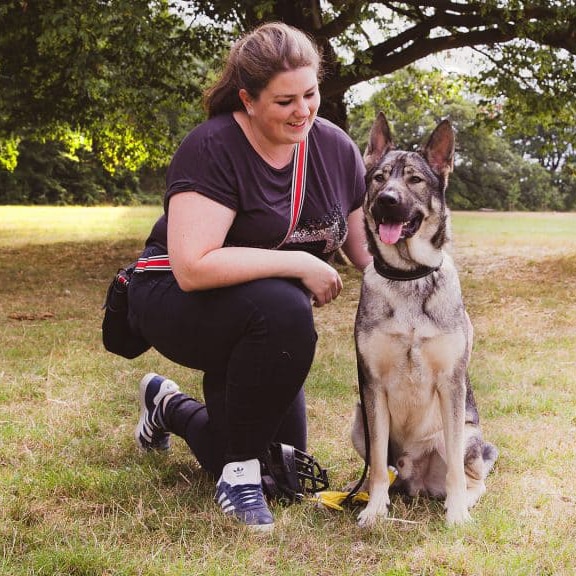
Author, Ali Smith
Ali Smith is a professional, qualified, and multi-award winning trainer is the founder of rebarkable. She has always believed animals deserve kindness and champions force free methods. Believing that dog guardians will all choose the kindest options if proper information is provided, she aims to help all dog guardians who need it and make dog training as accessible as possible
Ali lives win Maryland, US with her husband and her three dogs.


0 Comments