Un-crate training, aka how do you know when your dog is ready to be responsible enough to be left roaming around your home?
I find a lot of people begin crate training, and then they … kind of don’t know how to transition their dog to the way they want their dog, which is free roaming through the house.
Naturally, the idea of un-crate training comes with a lot of questions and trepidation.
Why? Because increasing them from a crate and monitored time in the home to being totally unmonitored whilst you’re out or whilst you sleep? Is really hard to know if they’re going to make a mistake which might cost you your TV, or your Grandma’s Ming Vase…
Well, fear not, because I got you (as always!).
In this post, we’re going to explore how to get from crated bed times, to successful household roaming status!
First let’s answer a question
What Age Should My Puppy Be To Begin Un-Crate Training?
Well, this very much depends on the individual – my real ‘criteria’ are below. But generally speaking? It can happen as early as 5 months, and any time thereafter. Personally? I uncrate trained Indie around 6 months.
Step 1 – Assess
So initially you want to look for some things that might suggest that your puppy is ready to start being responsible in and around your home. Instinctively, you’re going to get the inkling that they will be okay, but if you’re uncertain, here are some Green Lights and some Red Flags I’d look for.
| ✅ Toilet training is complete ✅ Chewing is directed to appropriate chews or toys. ✅ Needs minimal monitoring around the home ✅ Doesn’t door dash ✅ Reliable recall ✅ Can settle ✅ Sleeps overnight | 🚩 Still trying to chew unsanctioned things 🚩 Still having accidents in the home 🚩 Needs a lot of monitoring when around the home 🚩 Door Dashes. 🚩 Inappropriate behaviour with household members 🚩 no recall. |
The following would be beneficial but not required:
✳️ A place or bed cue
My instinct says that the one you’re questioning the most? Is the recall one. I mean, why do you need recall in the home?
Well, that’s because I’m a massive advocate of calling your pup off of something they shouldn’t be doing as opposed to physically adjusting where they are – regardless of whether you’re capable of moving them or not.
Try and treat your dog like they’re huge and of a weight that you couldn’t physically move them. That will instantly give you a respect for them that they will benefit from in the long run.

Step 2 – Monitor less during the day.
The next step would be to keep them out of their crate or in an open door crate as much as possible whilst you’re at home, but not 100% focused on pup. See if you can get your pup to relax and be around the house without getting into trouble.
Try and give them space to make the right choices time after time.
Step 3 – Add Gradual Freedom for the times where it’s just too Risky
When you genuinely have -200% mental space to give to them? I’d limit them initially to one room of total freedom during the day when you’re home. Extend their ‘crate space’ gradually (use a play pen to section off rooms or similar if you have to!) and give them more scope to prove themselves to you.
Then? As you’re getting more confident? We move on to step 4!
Step 4 – Try Overnight.
I love step 4 – it may give you some restless nights – but that’s likely going to be because of your nerves, because if your pup has successfully gotten to this stage? You’re doing great.
Now, you start by leaving the crate closed (or as normal) overnight, but you leave it unlatched. This gives your pup the opportunity to leave — if they want to. Chances are? They won’t.
Then, if you get a successful night? Try for some repeat success, and then step it up.
Leave the crate door ajar… it doesn’t have to be much. But you can do so and give them that extra bit of freedom and temptation.
Hopefully you start seeing more and more success.
If pup makes it all the way to your room? Try your bed cue! If that doesn’t work, pop them back in bed.
And, hopefully you’re not the worlds deepest sleeper so that you’ll wake if you start hearing something go crash! In the middle of the night and be able to intervene.
As that all goes well? You’re seeing repeat successes and pup’s still getting the sleep they need, then step 5 is coming!

TOP TIP! Remember to EXTRA EXTRA PUPPY PROOF!!
This is often where we go wrong with this process. So remember to double, triple, quadruple check that you’ve got your shoes away, kids toys away, there’s no food on your counters (or tables), and that anything that is at risk? Is out of bounds! No vet visits please (though, if you do need veterinary advice, have you heard of pawp?)
Step 5 – Build up daytime
Remember how we taught puppy to be confident when home alone?
Well, you’re going to start that process all over again but with puppy having freedom in your home.
So, slowly slowly increase the time increments puppy is left home alone, and free in your home. If you’re going to be going anywhere longer than you trust them for? Then popping them back in their crate won’t lose you any progress and is the truest measure of “Setting up for success” in this context!
And also, remember that Kongs can be super useful for moments like this too. (and they’re super easy to get on Amazon!)
Step 6 – Phase out the crate (optional)
This part is totally optional, but if you want to get that crate out of the way, then transitioning to a bed outside of the crate is totally okay. Personally? I like to follow my dogs lead on this one? And I encourage you to take their current bed out of their crate and just observe where they prefer to sleep. If it’s still in the crate it means your crate training was a phenomenal success, and that’s fine!
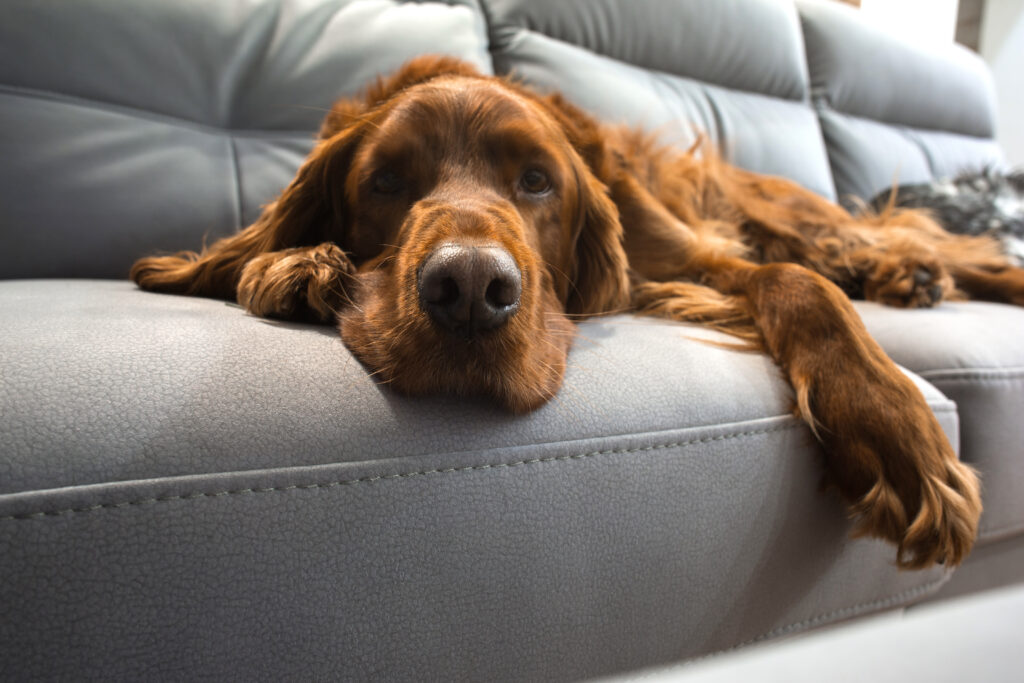
But if you can transition to a bed, it definitely helps make the house feel tidier, huh?
I would always keep the crate (if you can!) in case of medical emergencies or disasters or any of that less than predictable stuff.
Tip! Consider a camera!
Ever thought about getting a camera in? So that when you’re not in the space you can still see?
This might just give you the competitive edge (or just peace of mind so that you can get back to a restful night knowing that your puppy is sleeping soundly, like a good little pup!)
And Boom! We’ve Un-crate trained your dog!
Whilst this term is a lot less than technical, it’s essentially what we’ve done, eh? It means that now your dog is confident at home alone, and that you’ve now got them integrated as a part of your family full time.
Please do expect some minor accidents, whether that be toilet training, or chewing something you left all too accessible, just try to remember they don’t mean it, that you’re learning and you’re learning together.
Next time? Just make sure you put it away or maybe leave them for a little less time – just a bump on the road to success!
If you need any support with this process? Don’t be afraid to reach out! I’d be delighted to help with a 1:1 consultation!
Author, Ali Smith
Ali Smith is a professional, qualified, and multi-award winning trainer is the founder of rebarkable. She has always believed animals deserve kindness and champions force free methods. Believing that dog guardians will all choose the kindest options if proper information is provided, she aims to help all dog guardians who need it and make dog training as accessible as possible
Ali lives win Maryland, US with her husband and her three dogs.



0 Comments